.png)
Latest Fire Safety Regulation Changes in the UK
What you need to know in 2026 to stay compliant and protect lives
Fire safety law in the United Kingdom is undergoing one of its most significant transformations in decades. These changes are driven by lessons learned from
major incidents like the Grenfell Tower fire and a sustained government focus on strengthening building safety.
Here’s an up-to-date look at the key legal and regulatory updates affecting fire safety in 2025 and 2026.
🧱 1. Building Safety Act 2022 – Ongoing Reform
Although first passed in 2022, the Building Safety Act continues to reshape the legal framework for fire safety in high-risk residential buildings. It introduces new duties for building owners and creates a Building Safety Regulator to oversee compliance.
Under the Act:
Buildings defined as “higher-risk” (typically over 18m tall or seven storeys) must be registered with the regulator.
New certificates (e.g., Landlord and Leaseholder certificates) may be required to demonstrate compliance.
This legislation represents the most sweeping change to building and fire safety regulations in generations.
🔄 2. Amendments to the Fire Safety Order (Phase 3 Changes)
From 1 October 2023, significant amendments to the Regulatory Reform (Fire Safety) Order 2005 came into effect via Section 156 of the Building Safety Act. These changes are now embedded in fire safety law and impact all premises regulated under the Fire Safety Order.
Key updates include:
Fire risk assessments must be fully recorded and documentation maintained.
Responsible Persons must identify and record anyone involved in completing or reviewing risk assessments.
Improved cooperation and coordination between Responsible Persons for shared buildings.
Residents must be given clear fire safety information about the building.
These changes move fire safety law from a largely voluntary compliance culture towards greater accountability and transparency.
🚪 3. Fire Safety (England) Regulations 2022 – Continued Impact
Originally introduced in January 2023, these Regulations remain central to fire safety duties in multi-occupancy buildings.
Under the Regulations:
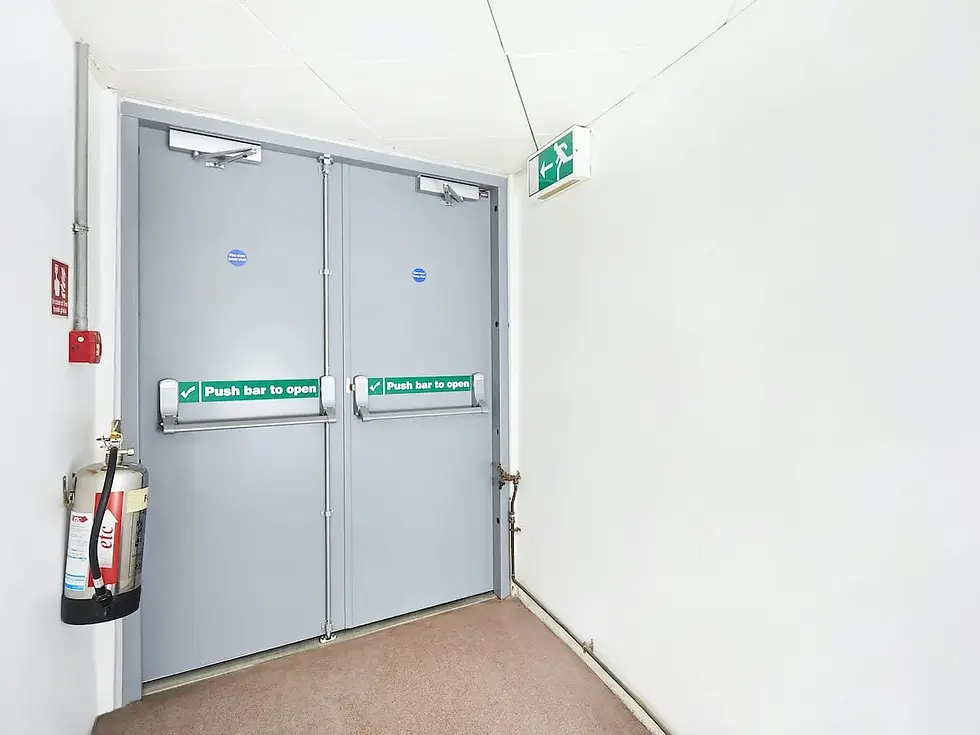
Quarterly checks on communal fire doors and annual checks on flat entrance doors are mandatory in buildings over 11m.
Buildings must provide residents with relevant fire safety information, including evacuation procedures.
Features such as secure information boxes (for firefighters) are required in many high-rise buildings.
These requirements are part of implementing recommendations from the Grenfell Tower Inquiry and remain vital for compliance.
♿ 4. Residential Evacuation Plans Regulations (April 2026)
A brand-new piece of regulation — the Fire Safety (Residential Evacuation Plans) (England) Regulations 2025 — will come into force 6 April 2026, introducing tailored evacuation planning for vulnerable residents.
Highlights include:
Duty holders must identify residents who may need assistance in a fire.
Person-centred fire risk assessments (PCFRAs) must be offered to individuals who request them.
Written Personal Emergency Evacuation Plans (PEEPs) may be agreed with tenants.
This is a major step towards personalised fire safety planning for people with mobility or cognitive challenges.
🏗️ 5. Changes to Fire Safety Standards (Design & Testing)
Several technical standards are also evolving:
The BS 9991:2024 fire safety standard outlines updated requirements for residential building design, management, and evacuation planning.
Traditional fire testing standards (BS 476) are being replaced by BS EN 13501 European classification systems, aligning UK fire testing with broader European frameworks.
These updates affect architects, designers, manufacturers, and specifiers, and will increasingly shape compliance in construction and refurbishment work.
🧯 6. Approved Document B & Building Regulations Updates
Amendments to Approved Document B — the part of UK building regulations dealing with fire safety — are being phased in over the next four years. These aim to improve standards for building design, including safer means of escape and fire resisting structures.
This phased approach gives industry time to adapt while ensuring higher safety benchmarks are reached.
📝 Why These Changes Matter
These reforms are not just administrative — they’re transforming how fire safety is managed in buildings:
More robust documentation means clearer accountability.
Personalised evacuation plans improve safety for vulnerable people.
Higher technical standards reduce risk from materials and design.
Greater resident involvement increases awareness and preparedness.
For property managers, landlords, designers and safety professionals, staying on top of these changes will be essential in 2026 and beyond.
📌 Practical Tips for Compliance
✅ Review and update your fire risk assessments documentation.✅ Ensure quarterly and annual fire door checks are logged.✅ Educate residents on fire safety plans and evacuation procedures.✅ Prepare to implement personalised evacuation plans from April 2026.✅ Engage competent fire safety professionals to interpret evolving standards.


Comments